
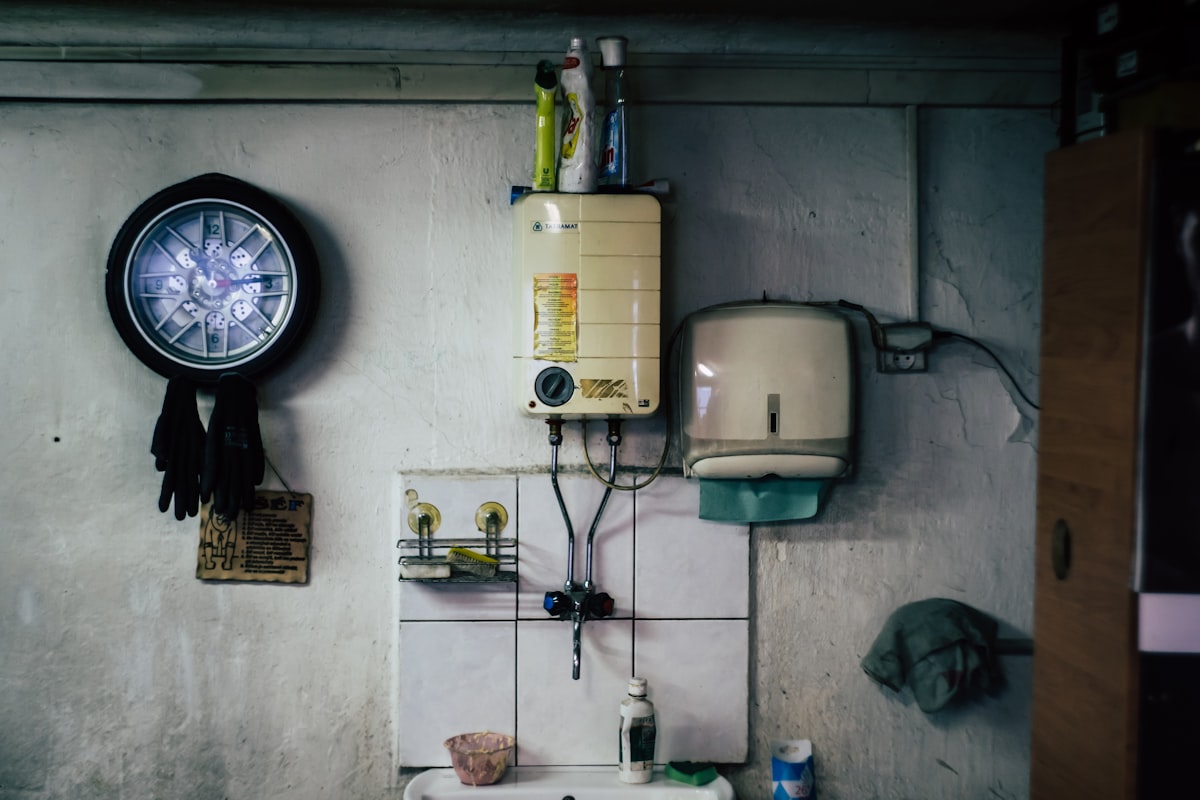
For decades, a water heater replacement in a GTA home meant swapping one tank for another tank of roughly the same size, in roughly the same spot. That's still the default for a lot of houses, and often the right call. But tankless units have become common enough that most homeowners at least ask the question now, usually when a tank finally fails and there's a decision to make on short notice.
Neither option is universally better. They solve different problems, and the right one depends on the house, the household, and what's already in the mechanical room.
Upfront Cost and Installation Complexity
A straight tank-for-tank swap is generally the simpler, less invasive job, especially when the existing venting, gas line and water connections are already sized correctly. A tankless installation is more involved by nature: the unit itself is a different category of equipment, and depending on the home, it can call for upgraded gas supply, new venting, and sometimes electrical work to support the unit's controls. That added scope is the main reason tankless installs tend to cost more upfront than a like-for-like tank replacement, even before accounting for the price of the unit itself. Over the appliance's working life, some of that gap narrows through efficiency and longevity, but it's not something we'll put a number on here — it depends too much on the specific home and usage pattern to generalize responsibly.
Space Savings — More Than You'd Think
This is where tankless has a clear, easy-to-see advantage. A standard tank takes up a meaningful footprint on the floor of a basement, closet or utility room. A tankless unit mounts on the wall and takes up almost none of that floor space. In older GTA homes where the mechanical room doubles as storage, a laundry area, or a workshop, that difference is often the deciding factor on its own — not the energy numbers, just getting the floor back.
Continuous Hot Water vs. Recovery Time
A tank heats a fixed volume of water and holds it ready. Once that volume is used up — a couple of back-to-back showers, a shower running while the dishwasher and washing machine are both going — it needs time to recover before it can supply hot water at full temperature again. How long that takes depends on the tank's size and recovery rate, but it's a real limit that larger households run into regularly.
A tankless unit heats water on demand as it flows through, so in principle it doesn't run out the way a tank does. The trade-off is flow rate: a tankless unit can only heat so much water per minute, so if too many fixtures are drawing hot water simultaneously in a larger home, output can still fall short unless the system was sized generously for that household's peak demand. Sizing correctly for the home's actual usage pattern is the part that matters most here — it's easy to undersize a tankless system for a busy household and end up disappointed.
Venting and Gas Line Considerations
This is the piece that gets overlooked most often. Tankless units typically require different venting than a standard tank — often a dedicated venting configuration suited to the unit's higher efficiency — which isn't always compatible with the existing chimney or vent run in an older home. Gas-fired tankless units also tend to demand a higher gas flow rate at peak output than a comparable tank, which can mean the existing gas line needs to be upsized to feed the unit properly. Neither of these is a reason to rule tankless out, but they're exactly the kind of thing that turns a straightforward swap into a bigger project once a contractor actually opens up the mechanical room. It's worth having this assessed before assuming a direct swap is possible.
Maintenance Differences
Tanks are relatively low-maintenance day to day, though sediment tends to settle at the bottom over time, particularly in areas with harder water, which can reduce efficiency and shorten the tank's working life if it's never addressed. Tankless units generally call for more deliberate periodic maintenance — descaling the heat exchanger being the main one — because mineral buildup on the internal components affects performance more noticeably in a tankless design than it does in a tank. Skipping that maintenance tends to show up as reduced output or error codes rather than a slow decline, so it's not something to put off indefinitely.
Which Homes Each Option Tends to Suit
A tank still makes sense for a lot of households: smaller families with predictable hot water needs, homes where the existing venting and gas line are already set up for it, and anyone prioritizing a simpler, lower-cost replacement. Tankless tends to suit larger households with high simultaneous demand, homes with limited mechanical room space, and new builds or major renovations where the venting and gas line can be planned in from the start rather than retrofitted. If you're not sure which category your home falls into, that's a reasonable thing to have assessed in person rather than guess at.
Weighing Tankless Against a Tank Replacement?
We'll take a look at your existing setup — venting, gas line, and household usage — and give you a straight answer on which option actually fits your home.