
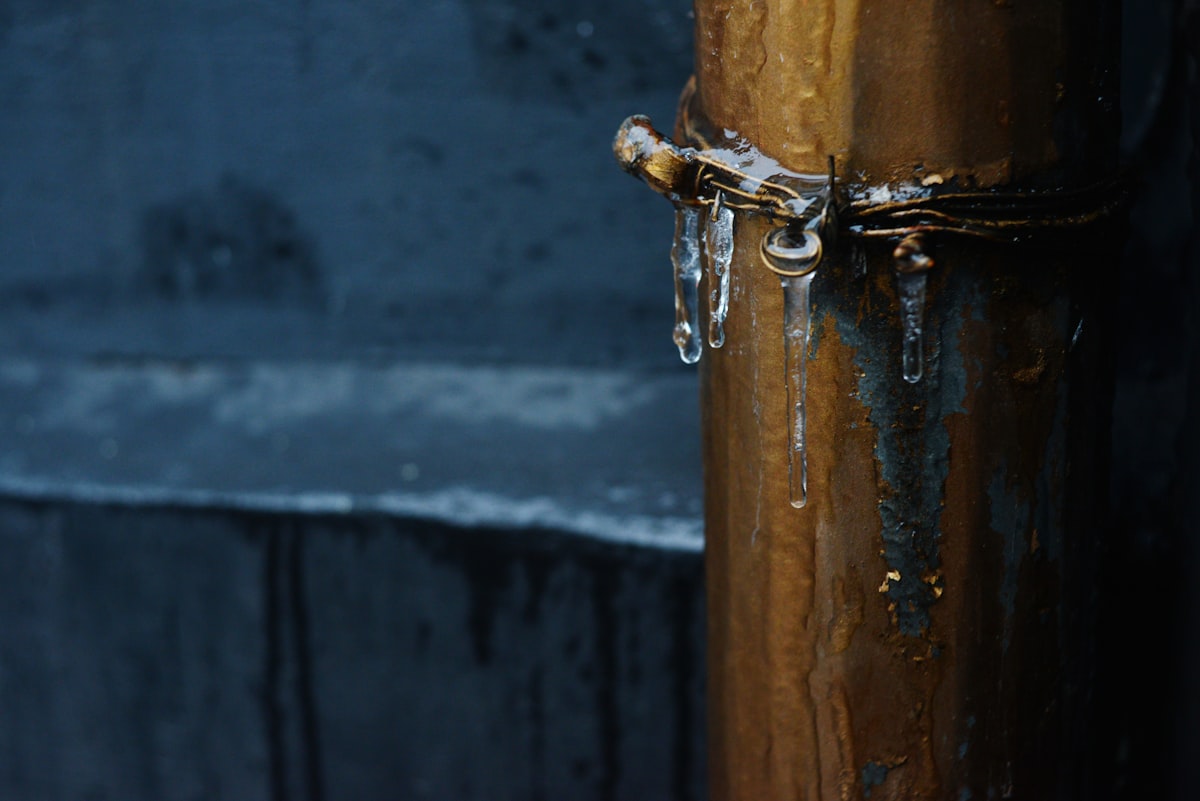
Ontario winters put real stress on residential plumbing, and it's rarely the pipes running through the middle of a heated house that cause problems. It's the ones running along exterior walls, through unheated garages, in crawlspaces, or out to an outdoor tap that take the brunt of a hard freeze. The good news is that most of what causes a pipe to freeze is preventable with a bit of preparation well before the temperature actually drops.
Why Exposed Pipes Are the Ones at Risk
Water expands as it freezes, and a pipe that's holding water when that happens has nowhere for the expanding ice to go — that's what leads to a crack or split, sometimes not discovered until the ice thaws and water starts leaking or spraying from the break. Pipes running through the interior of a heated home are largely insulated from outdoor temperature swings by the house itself. Pipes running along an exterior wall, through an attached but unheated garage, in a crawlspace, or exposed outdoors have far less protection, and in a prolonged cold snap, they're the ones most likely to reach freezing before anything else in the house does.
Prevention Steps Worth Taking Before the Cold Sets In
Disconnect and drain outdoor hoses. A hose left connected to an outdoor tap traps water in the line, and that trapped water can freeze back into the tap itself and crack it. Disconnect hoses, drain them fully, and store them before the first hard freeze of the season.
Insulate exposed pipes. Pipes running through a garage, crawlspace, attic, or any other unheated or minimally heated space benefit from pipe insulation sleeves or wrap, which is inexpensive and straightforward to install. It won't make a pipe immune to an extended deep freeze, but it buys meaningful protection against typical cold snaps.
Let a trickle of water run during extreme cold. Moving water is harder to freeze than still water. On the coldest nights of the year, letting a faucet on an exterior wall or vulnerable line run at a slow trickle keeps water moving through the pipe and reduces the chance of it freezing solid.
Open cabinet doors under sinks on exterior walls. A closed cabinet under a kitchen or bathroom sink on an exterior wall traps cold air right around the pipes. Leaving the cabinet doors open lets warmer room air reach the pipes and helps keep them above freezing.
Know where your main shut-off valve is before you need it. If a pipe does freeze and crack, the first thing you'll need to do is shut off the water supply quickly. That's a bad time to be searching for the valve for the first time. Locate it now — typically near where the water line enters the house, often in the basement — so you're not hunting for it during an emergency.
If a Pipe Does Freeze
A frozen but intact pipe usually shows up as a faucet that's producing little or no water, sometimes with frost visible on an exposed section of pipe. If you catch it before it cracks, gentle, gradual thawing is the safe approach — a hair dryer on a low setting, a space heater kept a safe distance away, or simply raising the temperature in the room, working from the faucet end of the pipe back toward the blockage. Never use an open flame or anything that heats the pipe rapidly and unevenly; a fast, uneven temperature change is a good way to turn a frozen pipe into a cracked one, and it introduces a real fire risk in an enclosed space. If you're not sure whether the pipe has already split, or the situation doesn't improve with gentle warming, it's time to call for help rather than keep experimenting.
Worth Doing Before the Next Cold Snap
None of this takes long, and most of it costs very little compared to the cleanup and repair that follows a pipe actually cracking. If you haven't gotten around to any of these steps yet this season, the next stretch of extreme cold is as good a reason as any to do it now rather than after something's already gone wrong.
It's also worth doing a quick walkthrough of the house with these vulnerable spots specifically in mind: the garage wall a supply line runs along, the crawlspace access panel that never quite seals tight, the outdoor tap that's easy to forget about once the hose is put away for the season. A five-minute check now is a lot less disruptive than discovering a problem the hard way once temperatures drop and stay down for several days in a row, which is when most freeze-related failures actually happen.
Dealing With a Frozen or Cracked Pipe?
A frozen pipe that's already split is a plumbing emergency. Call or text us and we'll help you shut things down safely and get it fixed.